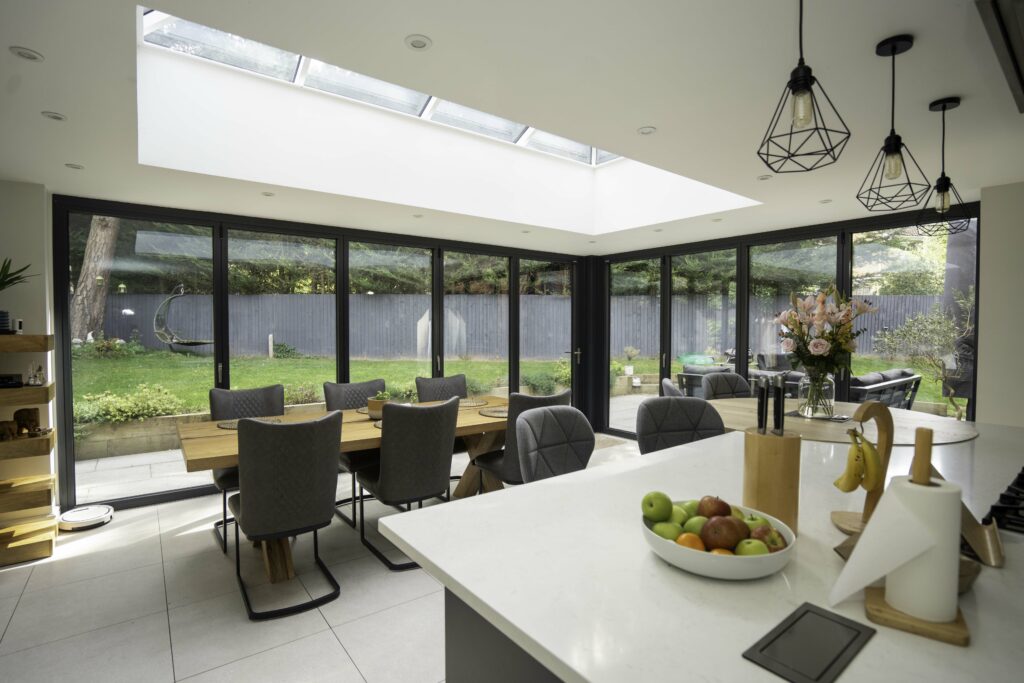
Adding a glazed extension is one of the most effective ways to create extra living space while increasing natural light and enhancing the value of your home. However, one of the most common questions homeowners ask is orangery vs conservatory – what’s the difference?
Although they share many similarities, an orangery and a conservatory each offer distinct benefits. The right choice depends on your property’s architecture, how you intend to use the room and the style of extension you want to create.
In this guide, we’ll explain the key differences between an orangery and a conservatory, helping you decide which option is the perfect fit for your home.
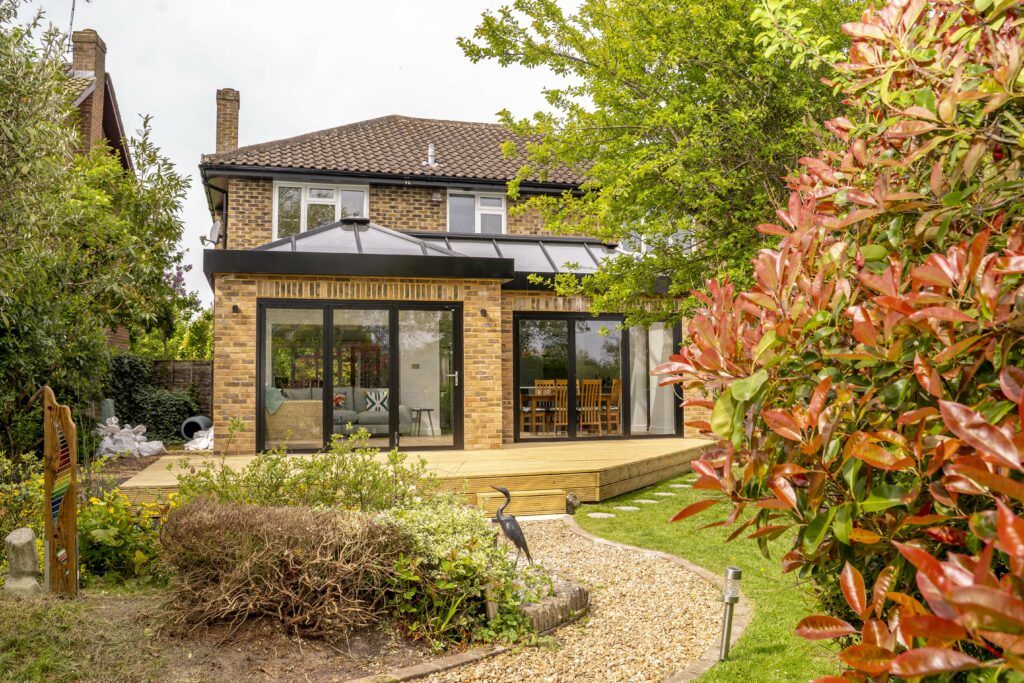
Orangeries have an interesting history dating back to the 17th and 18th centuries, when wealthy landowners built elegant structures to grow citrus trees and other exotic plants throughout the colder months.
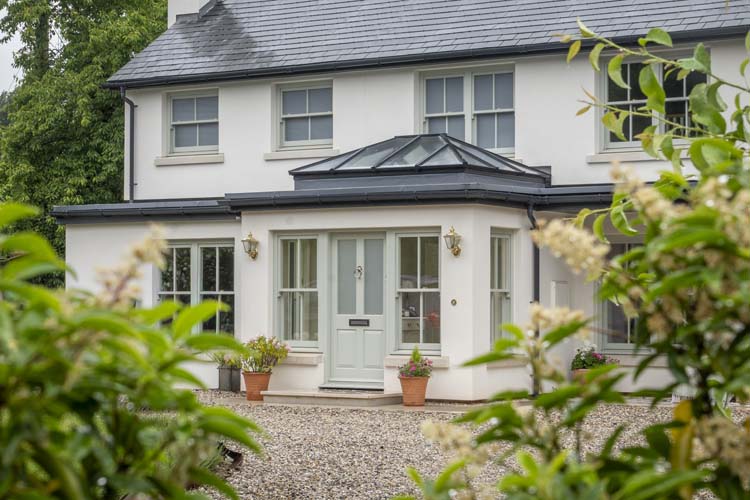
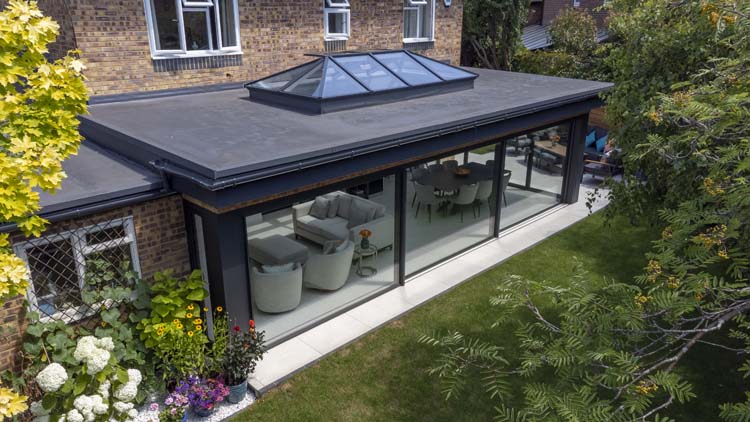
Unlike early greenhouses, these buildings were constructed from brick or stone with impressive tall windows that allowed sunlight to flood the interior. Many featured a central glass lantern, providing additional daylight while retaining warmth.
Today’s orangeries retain this architectural elegance but are designed as luxurious home extensions rather than plant houses. Modern designs combine substantial brickwork with expansive glazing, creating bright, comfortable rooms that feel like a seamless extension of the original property.
Whether used as a kitchen extension, dining room or family room, an orangery offers a refined balance between solid construction and generous glazing.
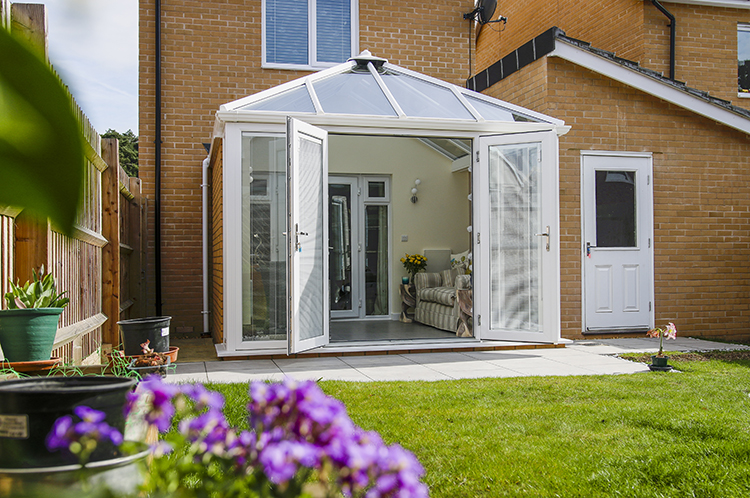
Conservatories became increasingly popular during the 18th and 19th centuries, evolving from traditional glass conservatory buildings used to cultivate delicate plants into practical residential spaces.
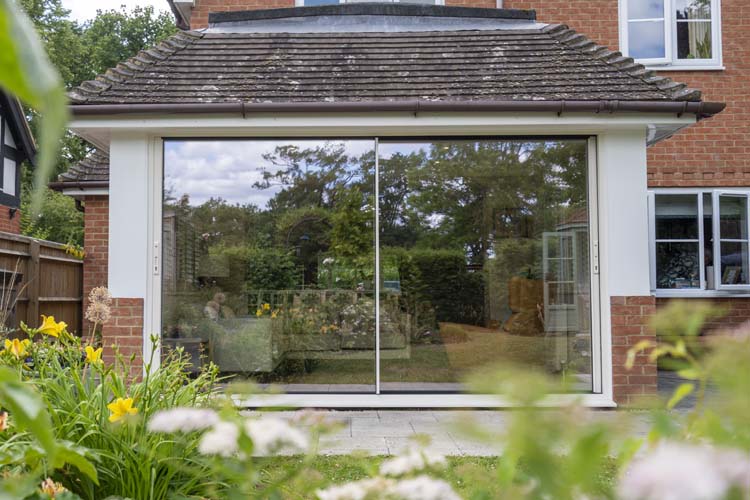
Modern conservatories are defined by their high proportion of glass. They typically feature large glazed walls combined with a fully glazed roof, creating elegant glass structures that flood the interior with natural daylight. Whether you choose a Victorian design, Edwardian style or a contemporary lean to conservatory, these glazed extensions create bright, airy rooms with uninterrupted views of the garden.
Because of their lighter construction, conservatories maximise natural light and create a strong connection between indoor and outdoor living.
Today’s premium conservatories use advanced glazing technology, thermally efficient frames and high-performance glazing, making modern glass structures far more comfortable throughout the year than those installed decades ago.
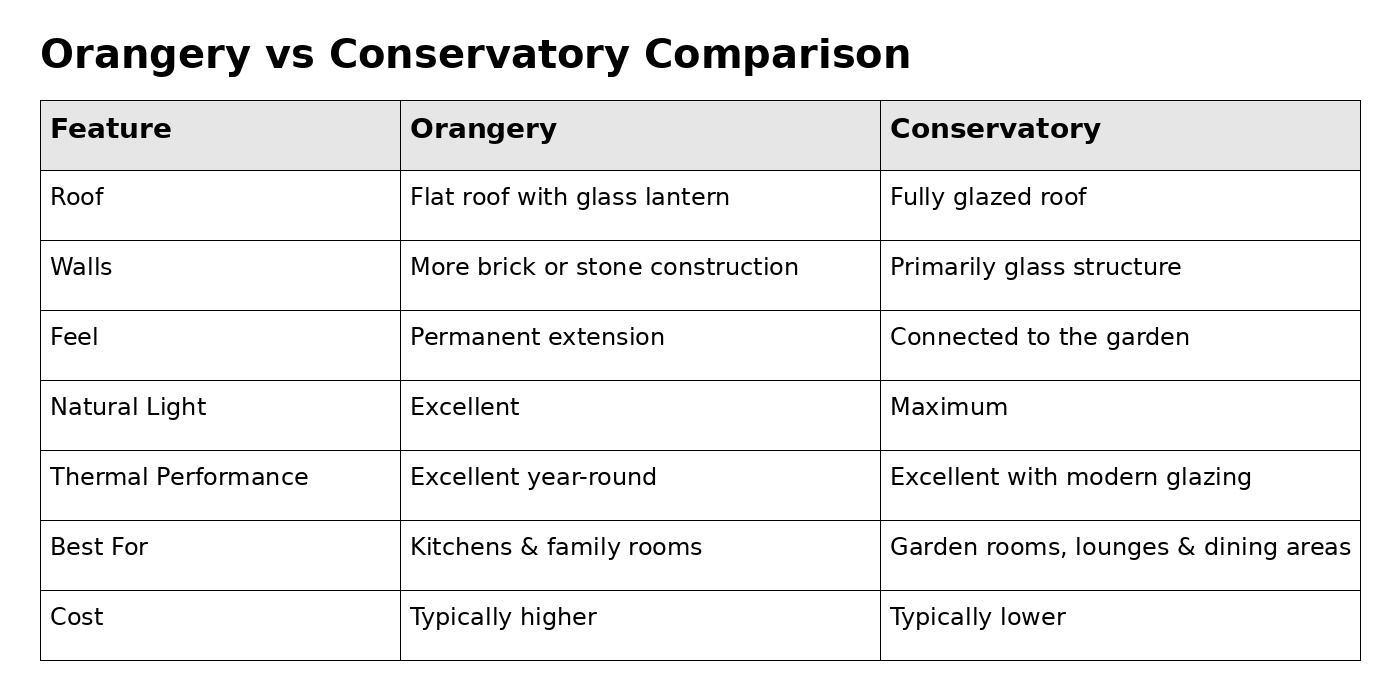
While both create beautiful additional living space, the biggest distinction lies in their construction.
Orangery Conservatory Flat roof with a glass lantern Fully glazed roof More brick or stone construction Primarily glass structure Feels like a permanent extension Feels connected to the garden Greater privacy Maximum external view Excellent thermal performance Outstanding natural light Ideal for kitchens and family rooms Ideal for lounges and dining areas
Although the differences appear straightforward, they significantly influence how each room looks, feels and performs throughout the year.
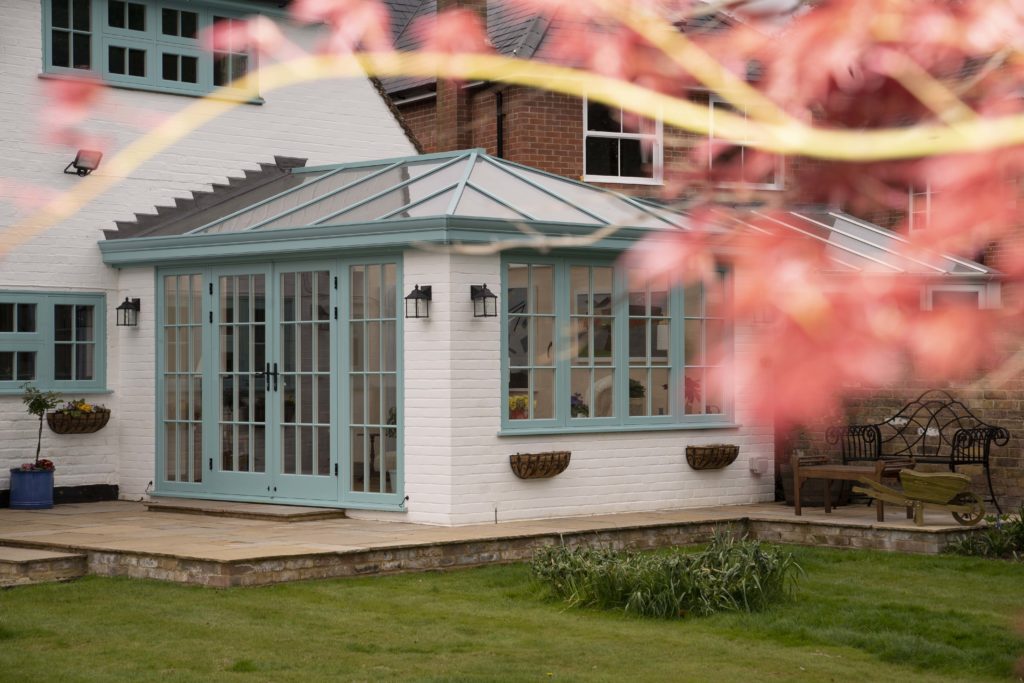
One of the easiest ways to distinguish between the two is by looking at the roof.
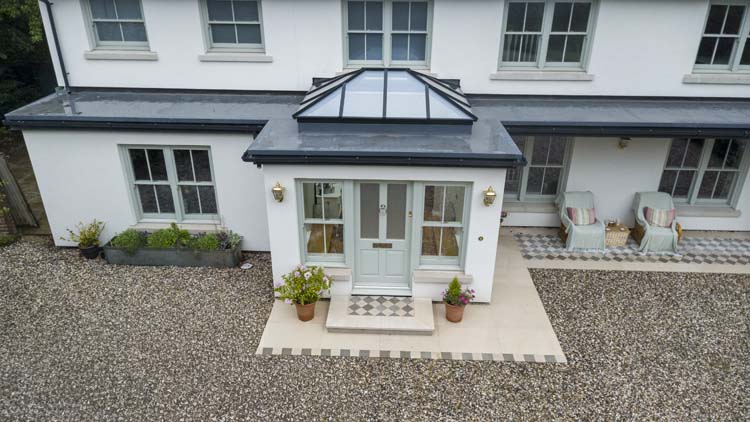
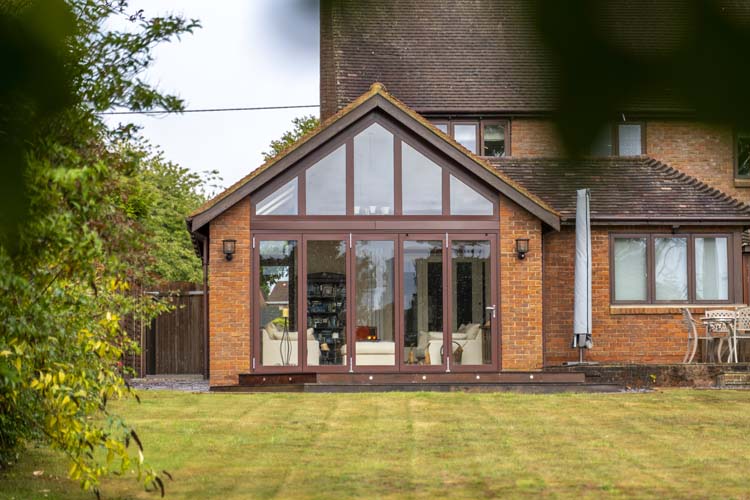
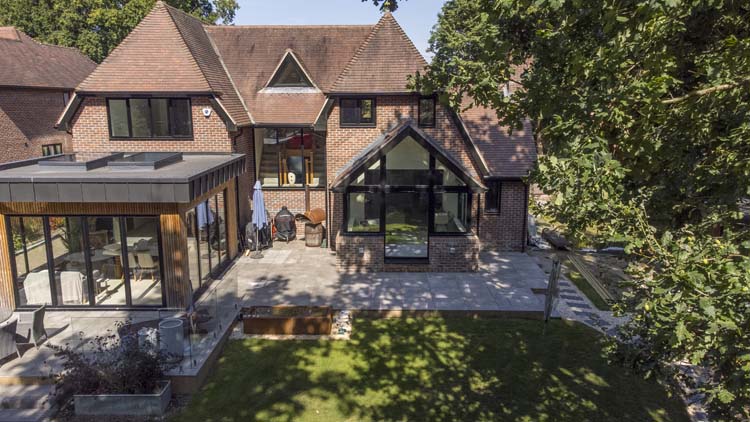
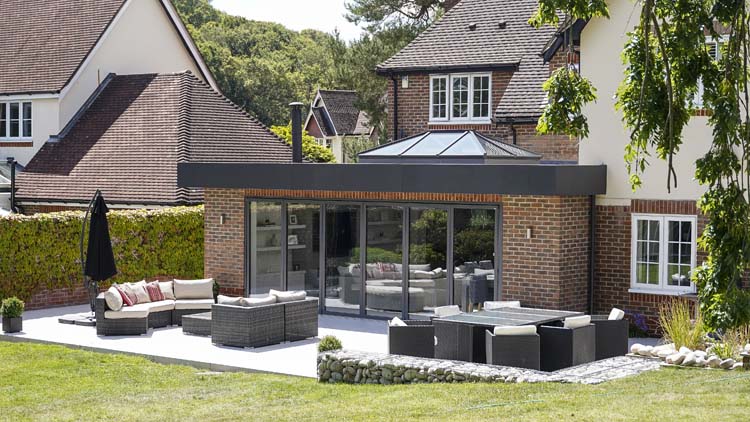
An orangery usually features a flat roof around the perimeter with a striking glass lantern positioned in the centre. This design allows sunlight to pour into the room while maintaining the solid appearance of a traditional extension.
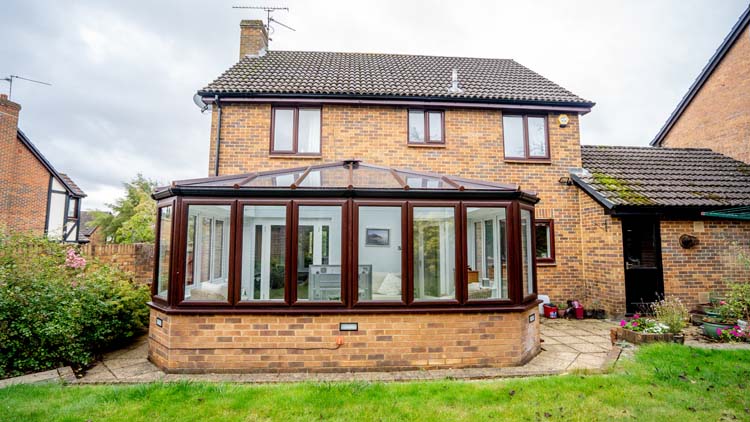
A conservatory, on the other hand, is characterised by its fully glazed roof. Whether Victorian, Edwardian, Lean-to or contemporary, these glazed roofs maximise daylight and create spectacular views of the sky.
Many homeowners love the feeling of sitting beneath a glass roof, while others prefer the more enclosed atmosphere created by an orangery.
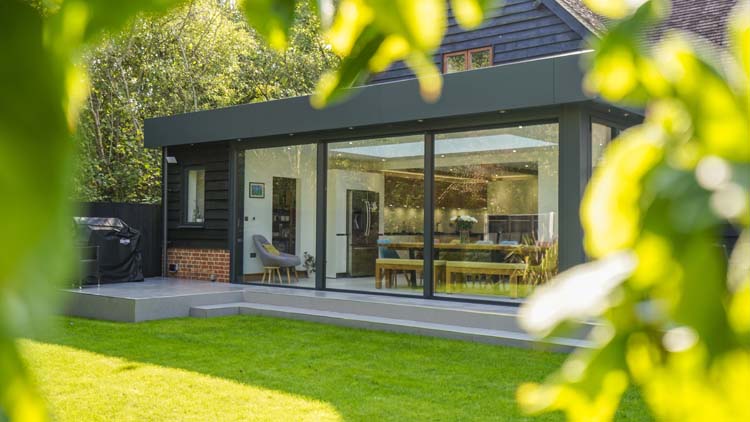
Both extensions are designed to maximise natural light, but they achieve it differently.
Because conservatories contain more glass, they generally allow the greatest amount of daylight to enter the room. This makes them ideal for garden rooms where uninterrupted views are a priority.
An orangery still feels wonderfully bright thanks to its large windows and roof lantern, but the additional brickwork creates a softer, more balanced atmosphere with fewer issues from glare during sunny weather.
Modern glazing has transformed the performance of both conservatories and orangeries.
Premium double and triple glazing, solar-control glass and thermally broken aluminium frames mean today’s glazed structures are far more comfortable than those installed decades ago.
However, an orangery often has the advantage when it comes to year-round comfort.
The additional masonry and solid roofs help regulate internal temperatures more effectively, keeping rooms cooler during summer and warmer throughout winter.
That doesn’t mean conservatories are unsuitable for everyday use. With high-performance glazing and careful design, they can also provide comfortable living space throughout the seasons.
Both options can increase property value when professionally designed and installed.
An orangery is often viewed as a premium home extension because it integrates so naturally with the existing house. Buyers frequently see it as additional living accommodation rather than a separate garden room.
A conservatory can also add significant appeal, particularly when designed to complement the architecture of the property and provide a seamless connection with the garden.
Ultimately, quality of design, materials and installation have a greater impact on value than the name attached to the extension.
Many homeowners assume conservatories never require planning permission, while orangeries always do.
In reality, this isn’t necessarily true.
Both may fall under Permitted Development Rights depending on factors such as:
Building Regulations may also apply depending on how the extension connects to your home.
Seeking professional advice early in the design process helps ensure your project complies with all necessary regulations.
Lifestyle plays a major role when deciding between an orangery and a conservatory.
If you’re creating an open-plan kitchen, family room or everyday living space, an orangery often provides the more practical solution. Its combination of solid construction and expansive glazing creates a room that feels integrated with the rest of the house.
If your priority is enjoying uninterrupted garden views, relaxing in the sunshine or creating a peaceful retreat filled with daylight, a conservatory could be the perfect choice.
Neither option is universally better—it’s about selecting the extension that best suits your lifestyle.
In general, an orangery is likely to cost more than a conservatory.
That’s because it typically includes:
However, premium conservatories with bespoke aluminium frames, advanced glazing and large spans can also represent a significant investment.
Rather than focusing solely on the initial cost, it’s worth considering the long-term enjoyment, functionality and value each extension brings to your home.
Choose an orangery if you want:
Choose a conservatory if you want:
Both offer exceptional benefits when thoughtfully designed and expertly installed.
Generally, yes. The combination of brickwork, insulated construction and a roof lantern often provides better temperature regulation throughout the year.
Not always. Many orangeries fall within Permitted Development Rights, although larger projects or listed properties may require planning approval.
A conservatory is usually the more affordable option, although premium specifications can narrow the price difference considerably.
Absolutely. Modern glazing, insulated frames and advanced roofing systems make today’s conservatories suitable for comfortable year-round use.
A well-designed orangery can increase both the appeal and value of your home by creating versatile additional living space.
Whether you’re considering a traditional conservatory or a bespoke orangery, choosing the right glazed extension starts with expert advice.
For over 40 years, Thames Valley Windows has been helping homeowners across Berkshire, Surrey, Hampshire, Buckinghamshire and the wider South East transform their homes with beautifully designed glazing solutions. With more than 37,000 happy customers, an Excellent Trustpilot rating, and one of the region’s largest flagship showrooms in Bracknell, our experienced designers can help you find the perfect extension for your lifestyle and property.
Visit our showroom to explore our range of premium orangeries and conservatories, or contact our team today to arrange your free design consultation.
Read our previous post - « Made to Measure Secondary Glazing
We can provide you with full colour 3D visualisations, allowing you to explore options that you may not have considered, with complete peace of mind.
Our showroom consists of:
Thames Valley Window Company
Head Office & Showroom
44 Longshot Lane
Bracknell
Berkshire RG12 1RL
United Kingdom
Designed so you can view most of our product range, our show room will help you understand what options will work best for you and your home.

Making plans to improve your home is exciting. If you would like to download any of our product brochures, please visit our brochure download page.